Wednesday, January 28, 2015

Impermanence


YOU ONLY LOOSE WHAT YOU CLING TO


- Buddha


Medicinal Plant: Lippia javanica (fever tea)

Lippia javanica (fever tea)
Medicinal Plant from the Healing Plant Collective


Photograph by David Gwynne-Evans

Not only is this plant of medicinal advantage, it is a great addition to any herb garden. Rich in volatile oils, the leaves produce a pleasing aroma. Lippia javanica is also an aesthetic delight with its creamy white flowers in dense rounded heads. Infusions are used to treat colds, coughs, bronchial problems and headaches. 

The leaves and twigs (and sometimes even the roots) of L. javinica are used. Hot leaf infusions are made with water and sometimes with milk. A weaker infusion is taken for general health purposes while a stronger infusion is used topically for scabies, lice, rashes, scratches, stings and bites. 

Mixed together with Artemesia afra, it is taken to combat fever in the case of malaria, influenza and measles.

Lippia belongs to the family with many scented-leaf genera, Verbenaceae. It was named after Augustin Lippi (1679-1701) ans also occurs in Java, hence this species name javinica. With the exception of the Western Cape, L. javanica is widespread throughout South Africa up into tropical Africa. 

This widely used medicinal herb is easy to grow from cuttings or seeds. It is great in a pot-pourri mix and makes a good cupboard freshener. 

Click here for image reference

Healing Plants Collective - click here to learn and share in the wonders of medicinal & useful plants!

"As a human race we have always used plants. Mother Nature supplies a wonderful abundance of medicinal, healing and useful plants. Let's learn together!

Tradition peoples still make use of these healing plants. The Healing Plants Collective aims to learn and share this knowledge. Through respect, sensitivity and openness we can learn how to work with nature.

It is an honour to be healed by plants."


Information largely taken from "Medicinal Plants of South Africa", 2009, and "PlantZAfrica.com".


Wednesday, April 16, 2014

A Taste for Medicinal Plants of Madagascar

There is a saying in Malagasy: “Ny sary vitan'anamalaho tsy amonoana vatotr'akoho” = One should try use natural means such as medicinal plants before resorting to Western chemical medicines.


Operation Smile - Madagascar Mission

It’s first light. The city is already thick with noisy character, filtering in through half open windows to waken those attempting the luxurious post alarm-clock snooze. Dawn gracefully allows the sleepy eyes of the privileged to slowly adjust to a new day while the streets beyond golden windows are already a hive of buzzing bodies.


Malagasy Cocktail: straight up with a pinch of vanilla

Antananarivo, capital city of Madagascar. The name takes some getting used to, and a few spiced-rums to accomplish correct pronunciation. 


Tuesday, February 25, 2014

Medicinal Plant: Athrixia phylacoides (bushman's tea)

Athrixia phylacoides (bushman's tea)
Medicinal Plant from the Healing Plant Collective


This aromatic shrub is widely distributed in eastern and northern parts of South Africa. The leafy twigs and roots are both used to treat a variety of ailments. The plant has antioxidant effects and there is significant activity against cancer cells.    

Medicinal Plant: Alepidea amatymbica (kalmoes)

Alepidea amatymbica (kalmoes)
Medicinal Plant from the Healing Plant Collective


This is a well known plant used to treat chest ailments and general colds. It is also used for asthma, influenza, and abdominal cramps. Roots and rhizomes of Alepidea amatymbica are chewed, ingested as part of an infusion, used as snuff or burned and inhaled. 

Wednesday, February 12, 2014

Poem: "Processing me"

From a bench in the sky
A kiss from the eternal river below
A moment of clarity
...humbles

Life continues with
     or without me
A choice to be present
     or to be stale
Grateful retrospectively
Appreciative blood-pumping post contentedness

But where was I?
Closing doors on the open sky
Ignoring kisses of the river
...Ashamed
Small
Human

But alive
     learning
            loving

Realisation of independence
     yet connectivity
Dependency, energy-bonding life

Seemingly apart
Ultimately one


Poem: "Opening"

Look at the clouds
See how they change
Look
What do you see?
How does your soul respond to the movements around?

Feel
Notice the movement within
     as you change subtly
     to the dance of the air

Listen
Hear the music midst the noise
     inner
                and outer

Breathe

No other function could be so satisfying!

Open
Embrace the music of your heart
     Let it sing
Let it love
     Let it be loved

This your choice
     Your freedom

Your joy

Sunday, February 2, 2014

Medicinal Plant: Cinnamomum camphora (camphor tree)

Cinnamomum camphora (camphor tree)
Medicinal Plant from the Healing Plant Collective

Click here for image reference
Although not indigenous to South Africa (it is native to China, Japan and Taiwan), the camphor tree was introduced and has adapted well to our climate, growing as tall as 26m. The bark and leaves have a characteristic camphor smell.

Saturday, February 1, 2014

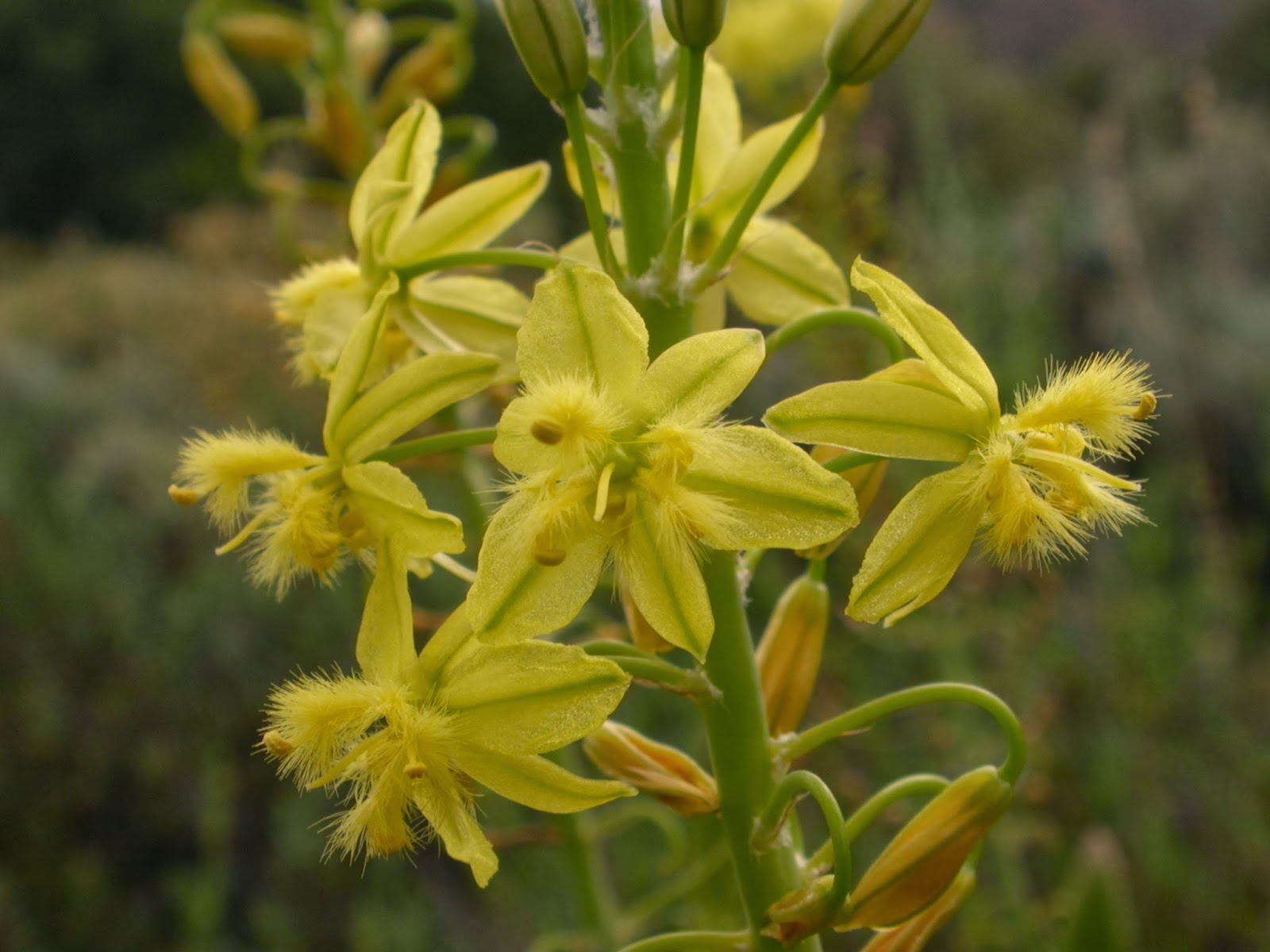
Medicinal Plant: Bulbine frutescens (burn jelly plant)

Bulbine frutescens (burn jelly plant)
Medicinal Plant from the Healing Plant Collective


This is another great medicinal plant whereby the leaf sap is used, along with its brothers B. asphodeloides, B. alooides, B. natalensis and B. narcissifolia. The leaves and its sap are used to treat wounds, burns, cracked lips, itches, rashes, ringworm and even herpes. The roots are believed to prevent and treat madness. 

Medicinal Plant: Carpobrotus edulis (sour fig)

Carpobrotus edulis (sour fig)
Medicinal plant from the Healing Plant Collective


The leaf sap is usually gargled to treat mouth and throat infections. It is also taken orally for dysentery, digestion problems and as a diuretic. The fruit are cold at street markets in the cape and are popular for jams and curry dishes.

Thursday, December 6, 2012

Knights of the Round Desert Moon

[This was written by Fran Siebrits and published online by Wild Magazine http://www.wildcard.co.za, 2012]
A very warm thank you to Marion Siebrits, Rochez O'Gardy and Dean Harrison for their kindness!


Mountain-biking in the desert sounds like a crazy idea. But when done at night, in the luminosity of the full moon, it becomes a surrealistically pleasurable experience. The five-day Desert Knights Mountain-biking Tour takes place in the spectacular ruggedness of the /Ai/Ais-Richtersveld Transfrontier Park.

Saturday, November 17, 2012

Listen... What do you hear?

The elements have been trying to tell me something this past week. Actually it’s more like they’ve been shouting at the top of their voices from the highest peak for all to hear! I have been listening. And this is what I have heard…


Friday, November 2, 2012

Campsites along the water's edge

[This was written by Fran Siebrits and published online by Wild Magazine http://www.wildcard.co.za, 2012]

The Cederberg has several rock pools with silky water where you can cool off on a summer's day. Picture by Fran Siebrits.

Being mesmerised by the flames of the campfire under a star-filled sky is indeed special. But the night becomes magical when you add the trickling sound of a river or the reflection of the moon on a still dam.

Zebras and canines

[This was written by Fran Siebrits and published online by Wild Magazine http://www.wildcard.co.za, 2012]

Picture by Romi Boom

Because of their vegetarian diet, zebras have no use for the killing-sharp canine teeth so essential to carnivores. These canines, however, are quite developed in male zebra … and quite useful too.

Campsites with the most privacy

[This was written by Fran Siebrits and published online by Wild Magazine http://www.wildcard.co.za, 2012]

Cederberg by Fran Siebrits
Cederberg Wilderness Area. Picture by Fran Siebrits

Camping alone in nature is a transcendental experience. It is so quiet without the crowds that one can hear the flap of a bird’s wing, the whispering of shy leaves and the silence-hugging landscape as it stretches awake in the early morning.


Monday, October 8, 2012

Everlasting Spring Celebrations in Cape Point

[This was written by Fran Siebrits and published online by Wild Magazine http://www.wildcard.co.za, 2012]
 
This year’s spectacular displays of spring wild flowers have come and gone in many parts of the Cape and along the West Coast. But delicate petals of delightful colours are still showing off in Cape Point. 
 

Bokbaai vygies (Dorotheanthus bellidiformis) Photograph by Fran Siebrits

Red-billed Oxpeckers Released in Mokala

[This was written by Fran Siebrits and published online by Wild Magazine http://www.wildcard.co.za, 2012]

After disappearing form the area for over half a century, the red-billed oxpecker has been introduced into Mokala National Park

Deceiving Daisies

[This was written by Fran Siebrits and published online by Wild Magazine http://www.wildcard.co.za, 2012]

There is more to the dazzling beauty of spring daisies than one would have thought. Their main aim is to attract pollinators, and they have more than one way of going about this challenge … even if it boils down to being a little deceptive.